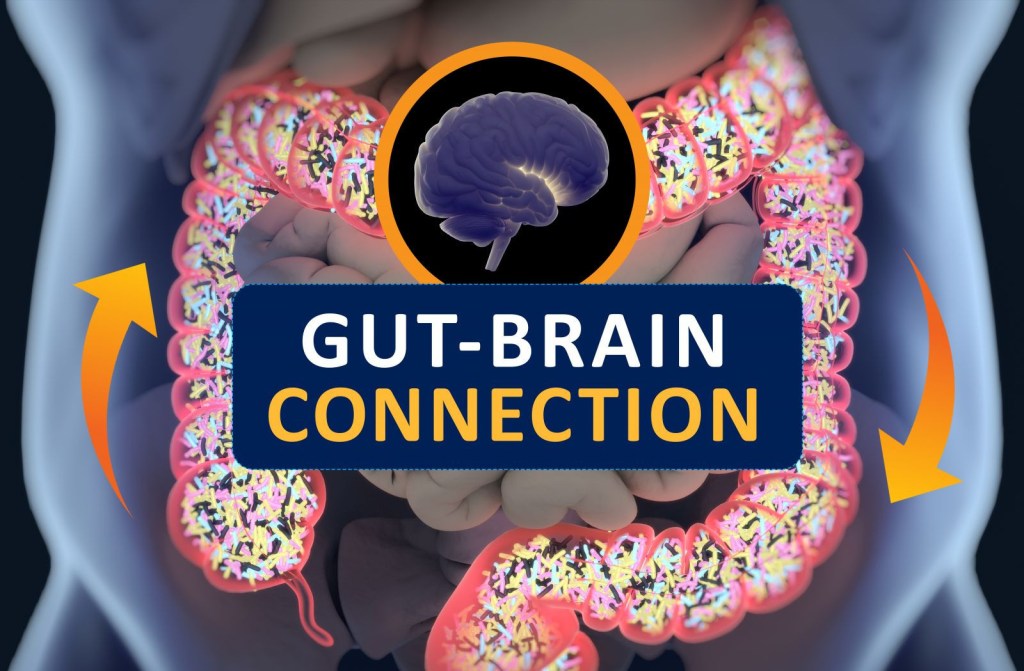
I would like to share something I found while researching MSA and its possible treatments. I found it quite interesting and thought you might too. Have you ever heard that the bacteria in your gut can affect your brain? It’s a hot topic in science these days. Our gut is home to lots of different bacteria – some are good for us, and some are not. Researchers are looking into how these tiny organisms might influence our brain and possibly play a role in brain diseases like MSA.
Just like in a garden, where you have helpful and harmful bugs, our gut has a mix of bacteria that are either good or bad for us. When the bad ones take over, it can cause problems not just in our stomach but also, as scientists suspect, in our brain.
Our gut and brain are connected by nerves and other pathways. They send messages back and forth. Imagine a two-way street where information is constantly being exchanged. This connection is why our emotions can sometimes affect our stomach.
Prions: Tiny Troublemakers?
One interesting part of this research is about Prions. Prions are misshaped proteins that can cause brain problems. Scientists think that some bacteria in our gut might make prion-like proteins and that these could travel up to our brain and cause issues.
Prions are like the troublemakers of proteins. Normally, proteins in our bodies fold in a specific way to do their jobs right. But Prions are proteins that didn’t fold correctly. The problem with Prions is that they can make other normal proteins also fold incorrectly, leading to a chain reaction. This misfolding can cause serious brain problems.
The Gut-Brain Link in Multiple System Atrophy (MSA)
Recent research suggests that some bacteria in our gut might be able to create Prion-like proteins. These are similar to the troublesome Prions and might cause the same kind of misfolding in brain proteins. For patients with Multiple System Atrophy (MSA) this idea is particularly interesting.
- Possible Trigger for MSA: MSA involves a build-up of a misfolded protein called Alpha-Synuclein in the brain. Scientists are exploring whether Prion-like proteins from the gut could be triggering or worsening this build-up.
- Understanding Disease Progression: If these gut-derived Prion-like proteins do travel to the brain, they might help explain how MSA progresses. This could be crucial in understanding why some people develop MSA and others don’t.
- A New Avenue for Treatment: If this gut-brain link is confirmed in MSA, it could lead to new treatment strategies. For example, targeting specific gut bacteria or changing the gut environment might slow down or prevent the misfolding of proteins in the brain.
- Early Detection: There’s also the potential for early detection of MSA. If certain changes in gut bacteria are identified as precursors to brain issues, doctors might be able to spot signs of MSA earlier.
Conclusion
This area of research opens up a whole new perspective on MSA. Understanding the role of gut bacteria and Prion-like proteins could be key in tackling this challenging condition. It’s a reminder of how interconnected our body systems are and how small changes in one area can have big impacts elsewhere.
For those affected by MSA, this research offers a glimmer of hope. While they’re still in the early stages of understanding the gut-brain connection in MSA, every bit of new knowledge brings us closer to better treatments and possibly a cure. Staying informed and supportive of scientific research is essential in this journey.
It’s amazing how much we’re learning about the human body. By staying curious and informed, we can understand how to take better care of ourselves. The future of health and medicine is looking at the small things, like bacteria, to solve big problems.
~Coach~


 Living Beyond the Diagnosis
Leave a reply to Nancy Bryant Cancel reply