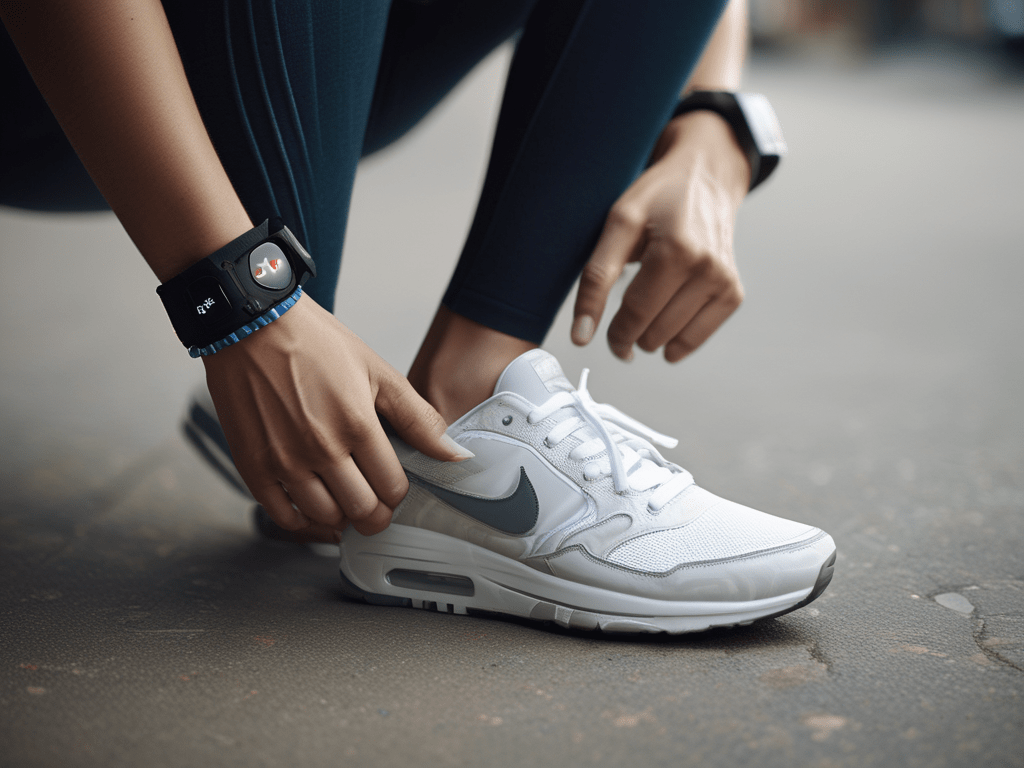
Hello again, dear readers. As many of you know, I have been sharing my journey through the MyTrial program at Khurana Labs, in cooperation with The Harvard Biomarker Study, in my battle against Multiple System Atrophy (MSA). My latest adventure took place after returning home from three days of intense onsite testing. This time, I want to share my experience with the accelerometer home evaluation—a crucial part of the trial designed to monitor my movements and track the progression of MSA.
A New Kind of Test
Upon arriving home, I received detailed instructions from Khurana Labs. My task was to wear two accelerometer devices—one on my right wrist and the other on my right ankle. These devices are designed to measure my movements on all four planes, providing valuable data that helps researchers understand my gait, balance, and overall movement patterns.
The setup was straightforward but required careful attention. I had to press down on the center of each device until a green light flashed. This light was a fleeting signal, but it indicated the device was active. Next, I positioned the wrist device with the gold ports facing my elbow and the ankle device just above my ankle bone, ensuring the ports faced down. The fit had to be snug but comfortable—tight enough to stay in place without causing discomfort.
Living with the Devices
For seven days, these accelerometers became a part of my daily life. I could take them off briefly for showers, especially the ankle one, which could be quite bothersome when damp. However, they had to be worn as much as possible to gather continuous data. Any extended removal over 30 minutes required a notification to the lab.
The first day was an adjustment. The devices felt foreign, and I was acutely aware of their presence. But as the days went by, I started to forget they were there, blending into the background of my routine.
What Do These Devices Do?
The accelerometers tracked my movements across three orthogonal directions (X, Y, and Z axes), capturing data continuously during all activities. This data is vital for several reasons:
- Activity Recognition: Identifying when I was walking, standing, sitting, or lying down based on characteristic acceleration patterns.
- Gait Parameters: During walking periods, they measured features like step length, step time, and cadence, along with the symmetry between my legs.
- Tremor Analysis: By analyzing the frequency and amplitude of accelerations, the devices could identify tremor characteristics.
This detailed analysis provides a comprehensive view of my motor function, helping researchers quantify gait abnormalities, track disease progression, and develop tailored treatment plans.
The Bigger Picture
After a week, I shipped the devices back to Khurana Labs, where the real magic happens. The raw data collected undergoes several stages of processing:
- Pre-processing: Cleaning the data to remove noise and errors.
- Feature Extraction: Identifying specific characteristics reflecting my movement patterns.
- Statistical Analysis: Comparing my data with healthy controls, tracking changes over time, and using machine learning to classify disease severity or predict future decline.
Reflecting on the Experience
Wearing these accelerometers was a constant reminder of my condition and the fight I’m engaged in. Yet, it was also empowering to know that every step, every tremor, and every moment of stillness was contributing to a greater understanding of MSA. This data is not just about me—it’s about all of us in the MSA community, helping pave the way for better treatments and, hopefully, a cure.
As I continue my journey with the MyTrial program, I am filled with a mixture of hope and gratitude. Programs like this give us a fighting chance and bring us closer to breakthroughs that were once only dreams.
Thank you for following along with my story. I’ll keep you updated on the next steps in this journey. Until then, take care and keep moving forward.
With hope,
~Coach~

 Living Beyond the Diagnosis
Leave a comment